

Bringing a rescue animal home is not the same as buying a pet from a breeder. The animal arrives with an unknown history, possible trauma, and a nervous system that has learned to expect uncertainty. That first month is less about bonding milestones and more about laying a foundation — the right environment, the right health checks, the right pace. Get the fundamentals right early and the relationship builds itself. Rush them, and behavioral and health problems surface months later in ways that are harder to untangle.
Creating a Safe Space Before the Animal Arrives
The biggest mistake new adopters make is underestimating how disorienting a new home is for a rescue animal. Shelters are loud, high-stress environments, and the transition to a quiet house does not automatically calm a pet — it often temporarily increases anxiety, because the familiar chaos is gone and the new rules are unclear.
Before the animal comes home, designate a single room or defined area as its base. This is where it sleeps, eats, and spends most of its first week. The room should be free of hazards like exposed cords, small objects it could swallow, or gaps behind furniture where it could get stuck and panic. For cats, this almost always means a bedroom or bathroom rather than an open living area. For dogs, a gated section of a main room with a covered crate available — not mandatory — gives structure without confinement.
Choosing between a crate and a pen for dogs is worth thinking through carefully. Crates work well for dogs with prior crate training or separation anxiety that benefits from a den feeling. Open pens are better for dogs who show signs of confinement stress — circling, panting, or refusing to enter. Watching the dog’s body language in the first 48 hours tells you which direction to go.
- Stock the space with at least two water sources so the animal is never without access if one gets knocked over.
- Use a pheromone diffuser designed for the specific species — feline or canine formulations are not interchangeable — and run it for at least the first three weeks.
- Introduce one familiar-scented item, such as a blanket from the shelter, to give the animal an olfactory anchor during the first few nights.
The First Veterinary Visit and What to Prioritize
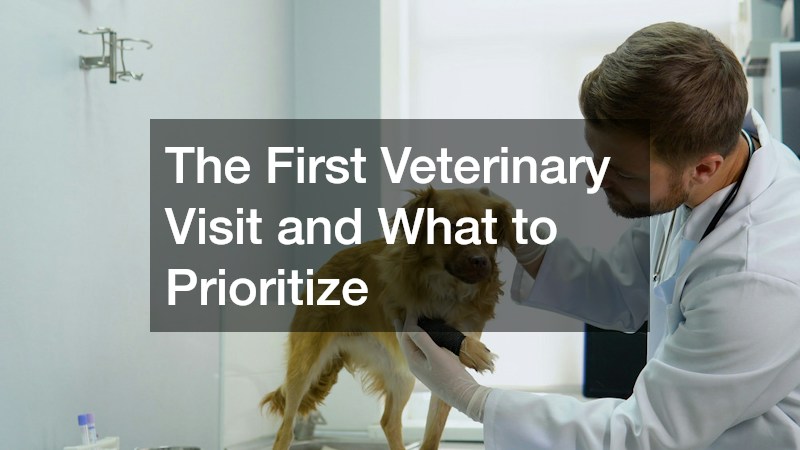
Shelters complete basic intake exams, but a thorough checkup with your own vet within the first seven to ten days is not optional — it is where hidden issues get found. Rescue animals frequently arrive with parasites that weren’t caught in the intake screen, dental disease that’s been progressing silently, or early signs of illness masked by stress hormones.
Bring any paperwork the shelter provided, including vaccination history and any medications already given. Your vet will likely run a fecal test for intestinal parasites, check for heartworm if the animal is a dog and it wasn’t recently screened, and assess body condition score. Weight loss hidden under a thick coat is common in cats especially.
The question of whether to pursue additional diagnostics at this stage depends on age and visible condition. A young, visibly healthy adult dog with clean bloodwork from the shelter probably doesn’t need a full panel immediately. A senior dog, a visibly underweight cat, or any animal showing lethargy or irregular appetite warrants bloodwork before the end of week two. The cost difference between a standard exam around $60-$90 and a full senior panel around $200-$280 is real, but catching kidney disease or thyroid dysfunction early changes the treatment trajectory significantly.
Know the location and hours of emergency vets before you need them — a rescue animal with an unknown history can develop symptoms quickly in the first month, and middle-of-the-night decisions are easier when you’ve already identified your options.
- Ask your vet specifically about heartworm prevention and flea and tick protocol for the region you’re in, as product needs vary by geography and season.
- Request a dental grade at the first exam so you have a baseline for deciding whether a cleaning under anesthesia is needed within the first six months.
Nutrition and the Risks of Changing Food Too Quickly
Rescue animals often arrive eating whatever the shelter had on hand — sometimes a lower-quality kibble, sometimes a rotating mix of donated brands. The instinct to upgrade immediately is understandable, but the digestive system of a stressed animal is more fragile than usual, and a sudden food change on top of environmental upheaval is a reliable path to diarrhea, vomiting, and a pet that won’t eat reliably.
The standard transition is a ten-day overlap: start with roughly 75% of the shelter food blended with 25% of the new food, then shift to 50/50 by day four, 25% old to 75% new by day seven, and full transition by day ten. If loose stools appear at any stage, hold that ratio for two extra days before continuing.
The choice between dry food, wet food, and a mixed approach involves real trade-offs. Dry kibble is cheaper and supports dental health to a modest degree, but it’s lower in moisture — a concern for cats especially, who are prone to urinary issues and rarely drink enough water independently. Wet food addresses hydration but costs more and spoils quickly. A mixed approach, such as a wet meal once daily with dry available otherwise, is a practical middle ground for most adult cats. Dogs are less moisture-dependent and do well on high-quality dry food if the protein and fat content is appropriate for their size and age.
- Check the ingredient list for a named protein source — chicken, salmon, beef — listed as the first ingredient, not a by-product meal or a corn-based filler.
- For dogs over seven years old, ask your vet whether a senior formulation with adjusted phosphorus levels is appropriate, especially pending bloodwork results.
- Weigh the animal at home weekly using a bathroom scale, stepping on with and without the pet, to catch weight loss before it becomes visible.
Reading Behavioral Signals in the Adjustment Window
The first two to four weeks are sometimes called the decompression period. During this time, a rescue animal’s behavior is not a reliable indicator of its long-term personality. A dog that seems completely shut down in week one may become playful and social by week three. A cat that hides for ten days may turn into a lap animal. The reverse is also true — some animals test boundaries more as they grow more comfortable, which owners misread as the pet “getting worse.”
Trainers who work regularly with rescue dogs often note that adopters make two opposite mistakes: some push the animal too hard — inviting strangers over, taking it to the dog park, starting formal training — in the first week, trying to socialize it out of shyness. Others go too far the other way, accommodating avoidance behaviors so thoroughly that anxiety gets reinforced rather than resolved.
A balanced approach means providing calm, predictable structure without forcing interactions. Set a consistent schedule for feeding, walks, and quiet time. Ignore anxious behaviors — pacing, whining — rather than soothing them with prolonged attention, which can signal that the behavior is working. Reward calm behavior when it appears with quiet praise or a treat, not an excited response that re-activates the nervous system.
- Keep the first two weeks of introductions to immediate household members only, limiting guests and new environments until the animal shows consistent calm at baseline.
- If fearful behaviors — freezing, cowering, growling when approached — persist past four weeks without improvement, schedule a consult with a certified applied animal behaviorist rather than a general trainer.
- Track behavioral changes in a simple daily note: one sentence per day for the first thirty days builds a pattern that’s genuinely useful if health or behavioral concerns arise later.
Setting Up for the Month Ahead, Not Just the First Week
The first month with a rescue pet ends, but its effects don’t. The habits, patterns, and health baseline you establish during that window shape how the animal behaves and how you respond for years. Most of the work is front-loaded: the safe space, the vet visit, the careful food transition, the consistent schedule. Once those are in place and the animal shows signs of settling — sleeping in open spaces rather than hiding, initiating contact, eating reliably — you have a foundation to build from. The second month is where genuine relationship-building starts. The first month is where you earn it.